
Part I of this series began much later, with Konerak Sinthasomphone and the consequences of adults misreading a boy who needed help. For Part II, I wanted to go backward and look at what American institutions had been taught to see when the person reporting sexual abuse was a boy. That takes us into old court opinions, newspaper stories, medical papers, and crime statistics, where boys were often present even when the language around them looked nothing like the language we use now. One Oklahoma case makes the problem clear almost immediately.
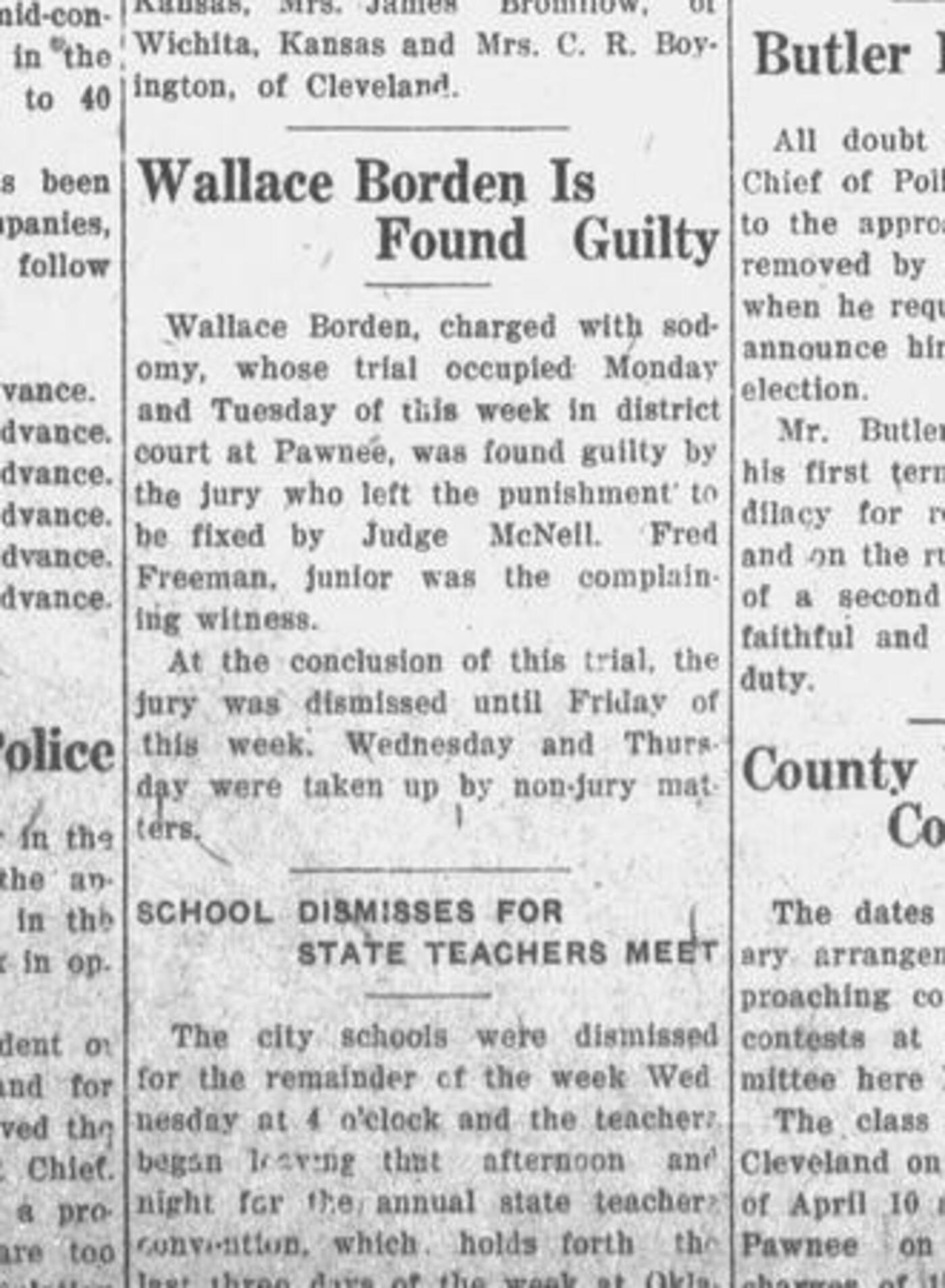
In October 1924, thirteen-year-old Fred Freeman was walking home from the school bus in Oklahoma when Wallace Borden encountered him. A passerby found Fred a short time later running toward a schoolhouse, crying and visibly upset. Fred said right away that he had been abused and mistreated, and he told his father the same thing when he got home. His father contacted law enforcement, Borden was arrested that evening, and the case eventually ended in a conviction that survived appeal.
The appellate court called Fred the "child victim." The local newspaper told the same story differently. When the Cleveland American reported the guilty verdict, Fred appeared as the "complaining witness," with his age, distress, immediate disclosure, and the court's victim language left out. Another Oklahoma newspaper had called a two-year-old boy a victim in a separate case years earlier, so there was never one vocabulary that everyone followed. The language depended on who was writing the record and what kind of record they were creating.
That difference is the reason this part of the series exists. Boys show up throughout the record long before 1970, in courtrooms, police files, hospitals, psychiatric papers, and state research. What changed from place to place was the category placed around the boy and the assumptions that came with it. A boy could be treated as a child who had been harmed, a witness whose testimony needed extra proof, a possible participant in the offense, or a data point attached to the adult who abused him. Once those categories are put next to each other, it becomes easier to see why the history of male survivors can look thinner than it really was.
The law could change a boy's position with a few years of age. In a 1932 California case involving several boys, fifteen-year-old Vernon was treated as an accomplice to the sodomy committed upon him. That classification meant his testimony could not carry the count by itself and needed independent corroboration. Thirteen-year-old Boyd occupied a different legal position because California law presumed children under fourteen incapable of crime unless there was clear proof that they understood the act's wrongfulness. The conviction connected to Boyd survived, while the count involving Vernon failed under the corroboration rule.
The legal issue reached beyond whether a court believed one boy and doubted another. Judges were also asking whether an older boy could be treated as someone who participated in the crime committed against him. California courts sometimes rejected that reasoning when there was evidence of fear, coercion, or a stronger adult controlling the child, but the question itself remained available to courts and juries. A boy's age, conduct, and response to the adult could become part of the legal argument about whether he counted as an accomplice. That could determine whether his own testimony was enough to support a conviction.
Minnesota made the problem even clearer because the state used different consent rules for boys and girls. In one case involving a seventeen-year-old girl, the state supreme court explained that she could not be treated as an accomplice because the law had removed her legal capacity to consent. The court distinguished an earlier case involving a sixteen-year-old boy, who had been treated as an accomplice because the same legal protection had not been extended to him. The difference came from the statute itself, which placed male and female minors in different positions even within the same general offense category.
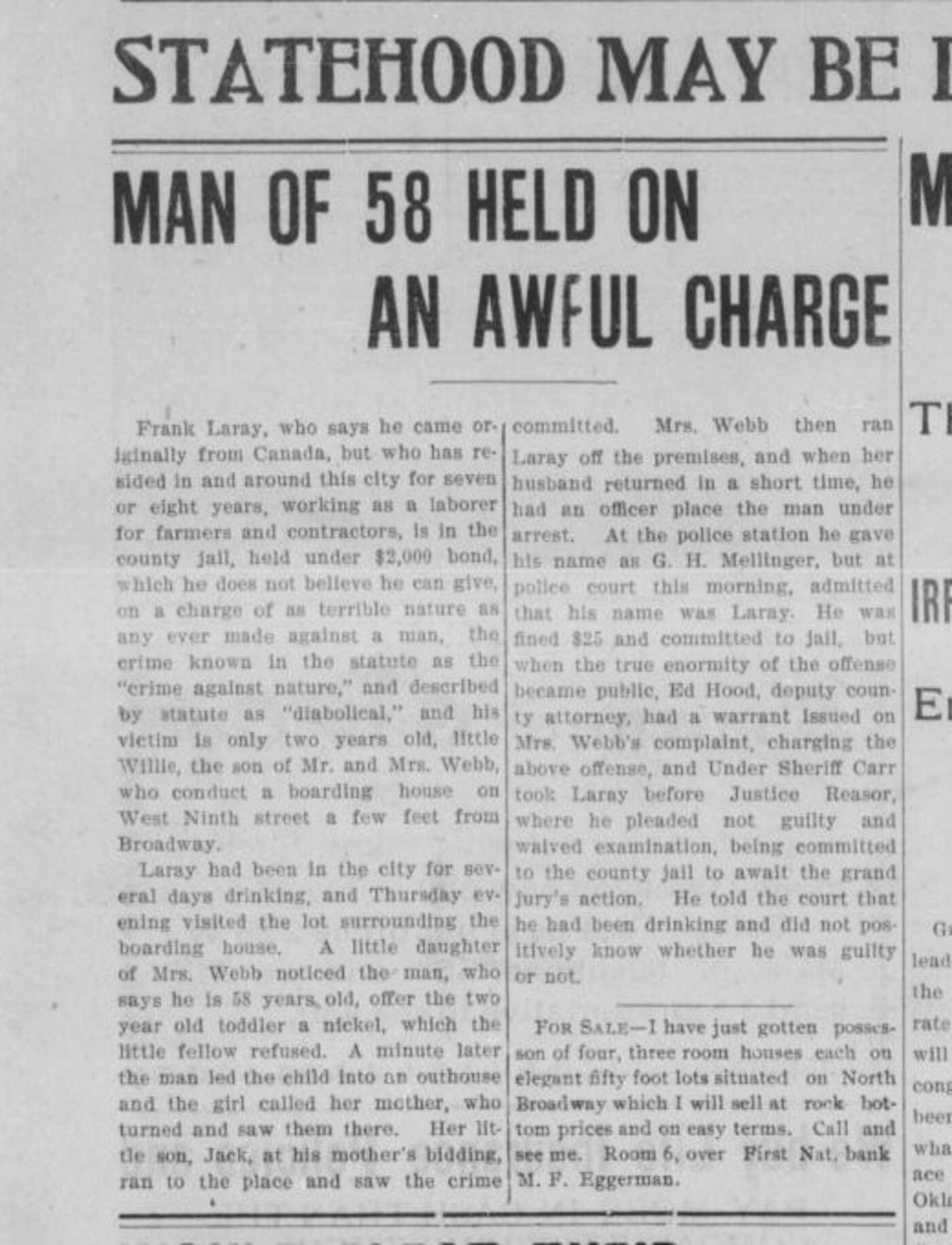
A Texas case shows how much that could matter in a boy's actual life. Fourteen-year-old David Schuster reported what happened to his mother as soon as he returned home, police were contacted, and the accused man was arrested. The appellate court still treated David as an accomplice because it found no force and no objection. His statements to his mother and to police could not be used to corroborate his own testimony, and the conviction was reversed. Nothing about that reversal required a finding that David had invented the allegation. The problem was the legal category placed around him and the evidence rule that followed from it.
Other states had ways to put a boy more clearly inside a child-protection law. In Idaho, ten-year-old Frederick Volavka was the child in a 1952 prosecution under a sex-neutral law that prohibited lewd conduct upon a child under sixteen. The Idaho Supreme Court allowed the prosecution to proceed under that child-specific statute and referred to Frederick as the victim. California also used child-protection provisions in some cases involving boys, and Nevada later increased the penalty under its crime-against-nature law when the other person was under eighteen. Those laws show that authorities did have legal tools capable of recognizing boys as children who needed protection, even while other courts were still asking whether a boy had somehow become an accomplice.
A three-year-old boy in Virginia ran into a different problem. In 1950, he disclosed sexual conduct involving a downstairs neighbor while his mother was bathing him. His parents went to police, a warrant was issued, the man was arrested, and the prosecution introduced admissions the man had made to police and federal workplace officials. The trial court convicted him. The Virginia Supreme Court later reversed because of the evidence rules attached to the particular offense, including a refusal to use the special complaint rule that applied in rape cases. The reversal did not depend on a finding that the child was lying, and the boy had already been recognized by his parents, police, prosecutors, and the trial court before the offense category changed what evidence could be used on appeal.
By the middle of the century, medicine and psychiatry were also looking at children who had sexual contact with adults, although the language could be difficult to read now. A Bellevue Hospital series published in 1937 followed sixteen prepubertal children, many of whom reached the hospital through Children's Court. The authors used theories of the period that allowed for the possibility that a child had cooperated, initiated the contact, or functioned as what they called the seducer. Boys were included in the larger cohort, although the surviving material does not preserve every boy-specific vignette well enough to reconstruct each child in detail. For a boy inside that system, reaching a major hospital did not guarantee that adults would understand him simply as a child who had been harmed. The theories available to those doctors could still place responsibility or sexual agency onto the child.
The same researchers later asked another question that says a great deal about what professionals were trying to understand. A 1952 follow-up considered whether childhood sexual experience had led to what the authors called a typical adult homosexual personality. Their reported answer for the group they studied was negative, but the question itself shows how easily the child's later sexuality could become part of the clinical frame. By 1962, medical writing could sound very different. Seymour Halleck wrote in JAMA about physicians managing victims of sex offenders and explicitly included male and female children, describing the family doctor as one of the places a child might first be seen.
If you only search for modern words such as survivor or child sexual abuse, much of this history becomes easy to miss. A boy might be present in a psychiatric study without being described the way we would describe a survivor now. He might appear inside research organized around the adult offender, or inside a court case whose central legal question was whether his testimony needed corroboration. He could be counted without being followed as a person whose own experience was the subject of the research. The surviving record therefore depends heavily on what the institution wanted to know about him.
California's state research makes that visible. A 1964 forensic-psychiatric book reproduced earlier state figures that included forty-two boys among 166 child and adolescent victims linked to one group of legally processed adult men. The same book reproduced another table containing 271 boys among 865 recorded victims in a treated-offender population. Those figures cannot tell us how common abuse was among boys generally because the samples were built around adults who had already reached court, prison, or treatment. They still show that boys were being counted inside official systems, even when the structure of the data kept the adult offender at the center.
Research design could make those children disappear again. David Gil's California work used police-registry material for a study of physical child abuse and excluded reports that did not fit the study definition. Fifty-eight of the excluded reports had been categorized by police as sex abuse. The surviving table does not identify the sex of those children, so it cannot be turned into a male-victim count. It does show how sexual-abuse reports could exist in the source records and then vanish from a later study because the researcher was measuring something else.
A 1968 District of Columbia public-health study drew another boundary by building its population around women and girls. Its rates were calculated against the female population, and its child group consisted of girls under thirteen. Boys therefore had no place in that particular denominator even though other records from the same era clearly show male children appearing in sexual-abuse cases. A Children's Bureau project from the same period studied child victims of sex crimes more broadly and was later described as including boys, yet the surviving federal summary gave greater visibility to girls and does not preserve an exact male denominator in the material available for this project. Inclusion in the underlying work did not always mean equal visibility in the version that survived.
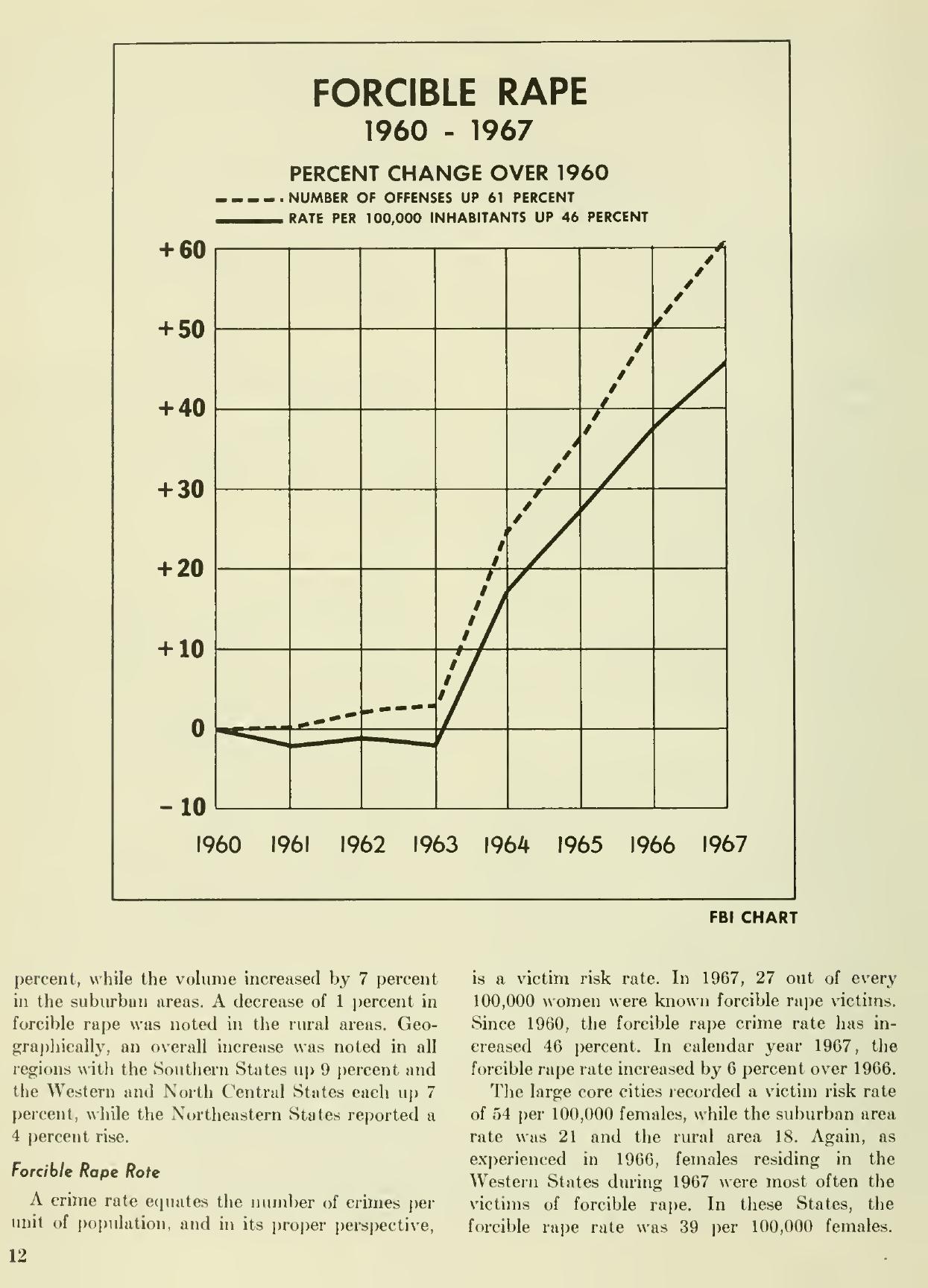
The national crime statistics created the largest version of that problem. The FBI's 1967 Uniform Crime Reports calculated the forcible-rape victim rate against women and females. Statutory offenses were excluded from that rape definition, while other sexual offenses were placed elsewhere in the arrest data. A boy could therefore appear in a local police file, a court opinion, a medical paper, or a state dataset and still remain outside the national rape figure people later looked to when trying to understand sexual violence. The number was answering a narrower question than many readers would assume from the word rape alone.
Fred Freeman helps make sense of all of this because his story sits near the beginning of the period and already contains the problem in miniature. One court could look at a thirteen-year-old boy who ran crying toward a schoolhouse and call him a child victim. A newspaper could reduce the same boy to the complaining witness in a few lines of print. Decades later, other boys could be called victims, accomplices, patients, research subjects, or simply become part of an offender's statistical history. None of those labels changed what had happened to the child, although they could change what the institution did next and what later generations were able to find.
By 1970, there was already a long record of boys reporting sexual abuse and being seen by families, police, courts, doctors, and researchers. Those records do not line up neatly because each system was built around its own legal definitions, medical theories, evidence rules, and statistical categories. That is the history the rest of this series needs in the background, because later cases grew out of institutions that had spent decades placing boys into different categories for similar kinds of harm. By the time the 1970s began, those categories were still operating at the same time.
The revised publication PDF used for Part II is available here.
Open Part II PDFSource references used in this publication copy
Borden v. State; Cleveland American, February 12, 1925; Shawnee News, August 25, 1905; People v. Singh, 121 Cal. App. 107, 8 P.2d 898 (1932); People v. Conklin; People v. Featherstone; People v. Westek; State v. Schwartz; State v. Panetti; Pipkin v. State; State v. Wall; 1967 Statutes of Nevada, chapter 211; Pepoon v. Commonwealth; Manual for Courts-Martial, United States, 1951; Bender and Blau, "The Reaction of Children to Sexual Relations with Adults" (1937); Bender and Grugett (1952); Halleck, "The Physician's Role in the Management of Victims of Sex Offenders" (1962); Mohr, Turner, and Jerry, Pedophilia and Exhibitionism (1964); Gil project material reproduced by NCJRS; Hayman, Lanza, Fuentes, and Algor, "Rape in the District of Columbia" (1968); Children's Bureau project summary, ERIC ED035908; DeFrancis final-report catalog record; FBI, Uniform Crime Reports for the United States, 1967.
This work is free to read and will remain free. If you would like to help cover the cost of records, research, and keeping the project online, you can support the work through Buy Me a Coffee.
SUPPORT THE WORK