
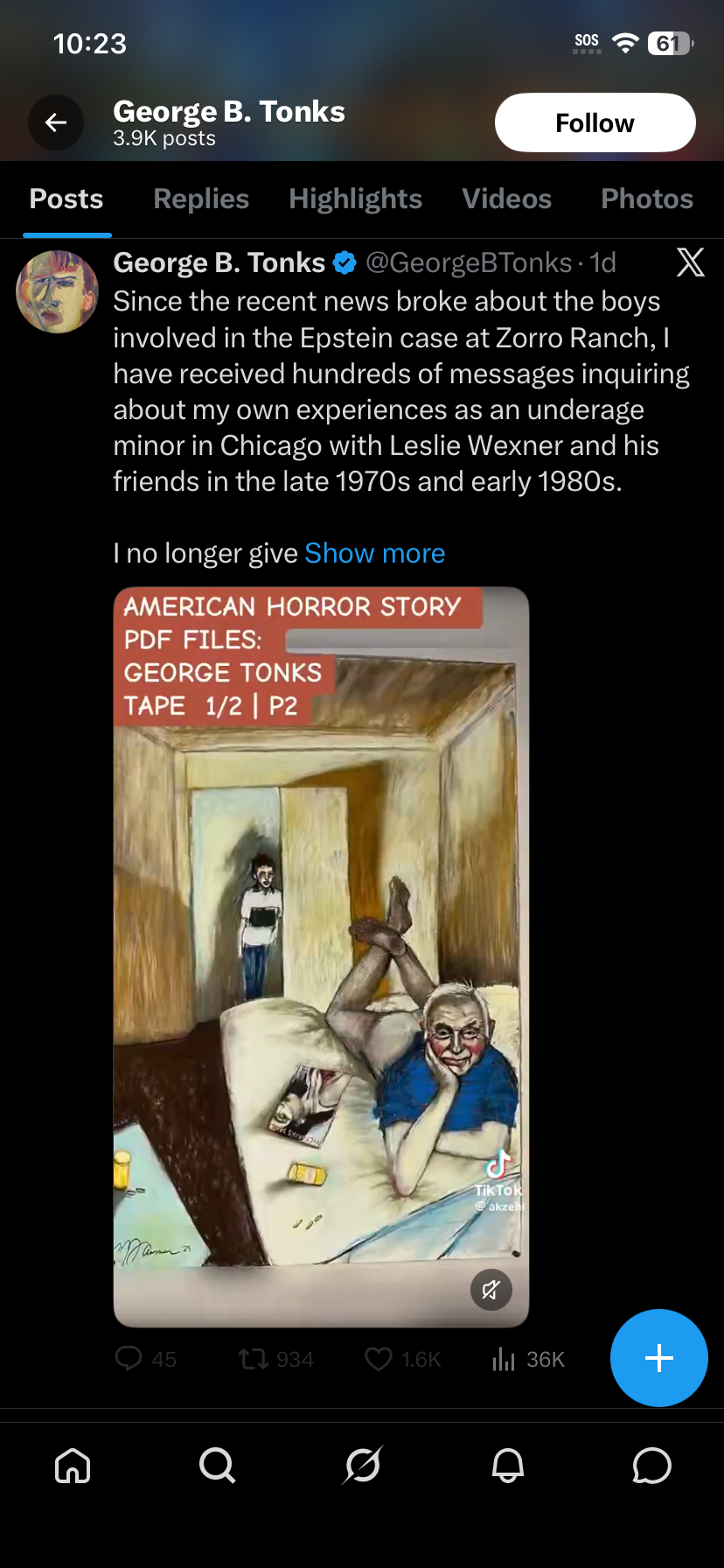
Part One: the Iran-Contra Background
For those of you who are not familiar, this is a true CIA coverup that goes much deeper than most who do know about it. Iran-Contra began in the 1980s, when the Reagan administration was backing the Contras, armed groups fighting Nicaragua’s left-wing government. Congress eventually restricted U.S. funding for that war through a series of laws known as the Boland Amendments, but the support did not simply stop. White House aide Oliver North worked with retired Air Force general Richard Secord, businessman Albert Hakim and others to build a private network that could move weapons and money outside the normal government funding process.
At the same time, the administration secretly approved weapons sales to Iran, despite its public policy toward the country, in an effort also tied to securing the release of American hostages in Lebanon, one of whom was my uncle. Money from those transactions moved through Swiss accounts and private companies associated with what investigators later called “the Enterprise,” and some of the proceeds were diverted into the Contra operation. Saudi arms dealer Adnan Khashoggi helped finance several of the Iran transactions, while Khashoggi and Iranian intermediary Manucher Ghorbanifar used BCCI, the international bank later exposed by a Senate investigation for extensive criminal conduct and secretive financial dealings.
The first 500 TOW missiles moved through Israel.
Independent Counsel Lawrence Walsh’s final report records that Southern Air Transport ferried the February 1986 shipment from the United States to Israel before an Israeli charter carried the weapons to Iran.
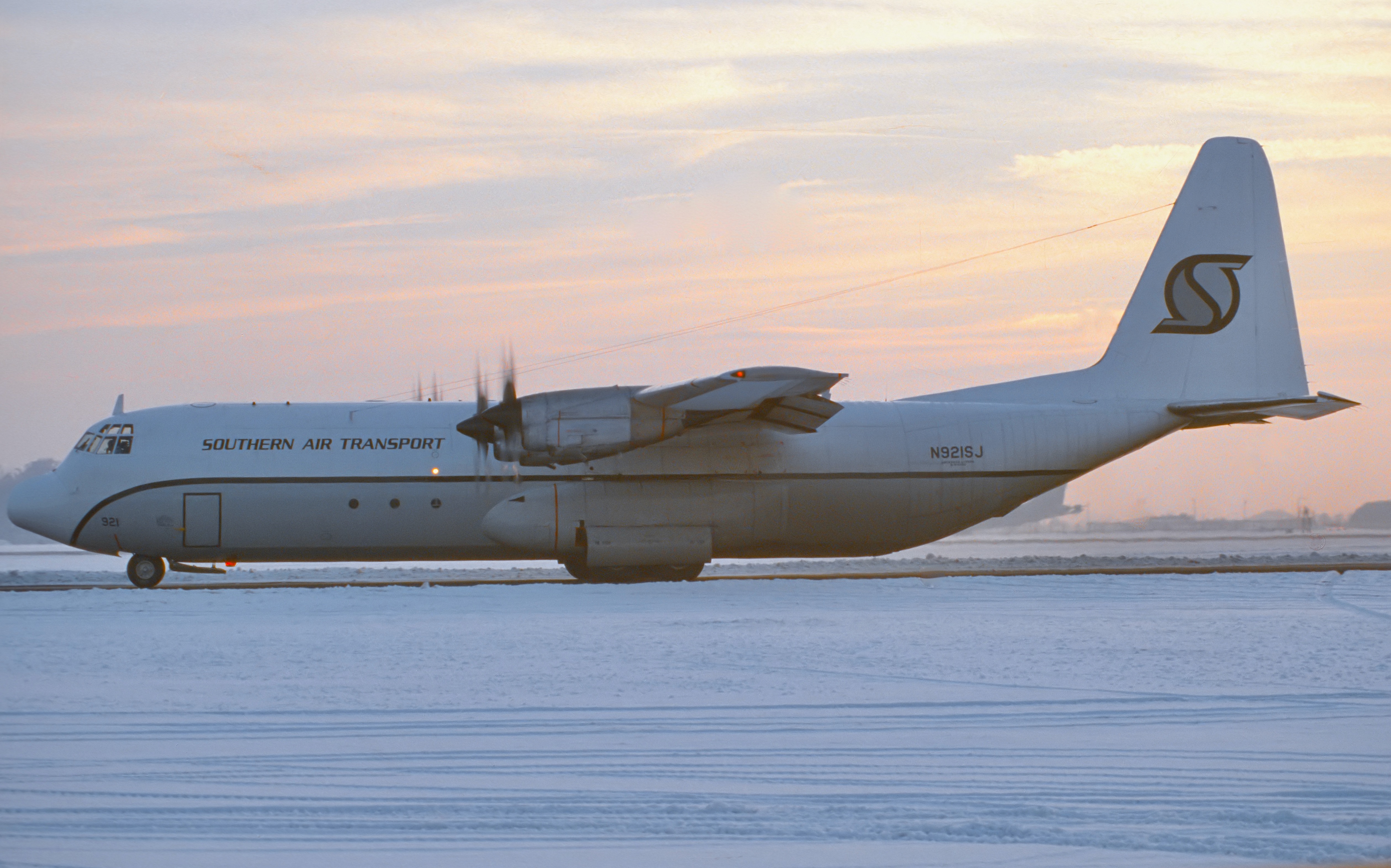
Open the Walsh report →Southern Air Transport was one of the companies that made this system physically possible. It was a Miami-based cargo airline that the CIA purchased in 1960 and operated for years as a proprietary company, meaning it looked like an ordinary private business while being owned and used by the intelligence agency. The CIA sold the airline in 1973, but Southern Air continued doing substantial work for the U.S. government and later became deeply involved in the transportation side of Iran-Contra. Independent Counsel Lawrence Walsh documented nearly $2 million in payments to Southern Air for aircraft, maintenance, parts, cash advances and other services connected to the Contra resupply operation.
The airline was also used on the Iran side. In February 1986, Southern Air carried 500 American TOW missiles from the United States to Israel as part of the weapons pipeline that ultimately supplied Iran. Read that again, and think about what is going on today. The airline that had once belonged to the CIA later became part of a private transportation system moving weapons and supplies through an operation Congress had tried to restrict, financed through offshore accounts, private companies and intermediaries operating largely outside ordinary public scrutiny.
Part Two: From Iran-Contra to the Wexner-Epstein Aircraft Network
After Iran-Contra became public, Southern Air did not disappear. Its large Hercules cargo aircraft moved heavily into Africa, where the company flew food and relief supplies during wars and famines in Ethiopia and Eritrea, Somalia, Sudan and elsewhere under contracts involving the United Nations, the Red Cross, Caritas and other relief organizations. This was also the period when Edward V. K. “Kim” Jaycox, who becomes more relevant later in this piece, was moving into the highest levels of the World Bank’s African operations. He became vice president for Eastern and Southern Africa in the mid-1980s and vice president for the entire Africa Region in 1987 after building much of his earlier World Bank career in transportation and infrastructure projects. A 1986 World Bank memorandum, for example, sought Jaycox’s approval for financing connected to Malawi’s Northern Transport Corridor.
.jpg)
The aircraft story later reaches Columbus, where Leslie Wexner had already formed The New Albany Company with his longtime friend and business partner Jack Kessler in the mid-1980s. Kessler became chairman of the company, served on The Limited’s board and held a position with the Columbus Metropolitan Airport Authority while central Ohio was expanding its aviation and cargo infrastructure. By then, Jeffrey Epstein had become Wexner’s financial adviser and held extraordinarily broad power of attorney over Wexner’s affairs.
In 1995, Southern Air Transport moved its world headquarters from Miami to Rickenbacker Airport outside Columbus, and officials announcing the move said much of its Hong Kong-to-Columbus cargo would be merchandise for Wexner’s The Limited. The aircraft transactions around Wexner and Epstein continued separately from that cargo operation. Sworn testimony from former Wexner flight engineer Larry Morrison states that Epstein later purchased Wexner’s Boeing 727 directly from him, after which Wexner replaced it with a new aircraft and Epstein hired personnel from Wexner’s flight operation to run the 727. The chronology moves from Southern Air’s Iran-Contra aircraft operations through its African relief and cargo work and into its 1995 relocation to Wexner’s home base in Columbus, while Wexner, Epstein and Jack Kessler were already tied together through finance, New Albany development and central Ohio’s business infrastructure.
Part Three: George Tonks and Tamara Jaycox Kessler
George Tonks was a successful modeling-industry businessman who, in the early 1990s, was operating DuPont Model Management. Before his federal prosecution, he had given authorities information about Leslie Wexner and other powerful men connected to events from his youth after years of trying to get people to listen to what happened to him as a young boy. The federal prosecutor who handled his 1993 criminal case in Philadelphia was Tamara Jaycox Kessler.
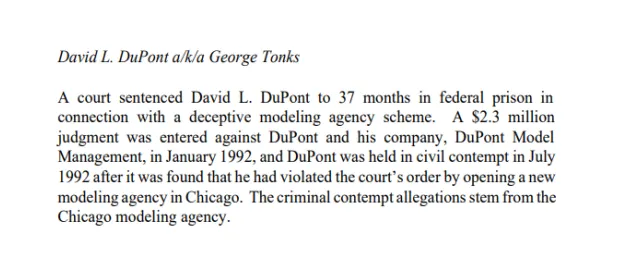
Her background becomes important because Tamara was married to Lewis Maier Kessler, a lawyer from the Pittsburgh Kessler family. Lewis was the son of Theodore Kessler, a federal research physicist, while another branch of the Kessler family produced John W. “Jack” Kessler, one of Leslie Wexner’s closest longtime business associates. Jack co-founded The New Albany Company with Wexner, helped build the New Albany development outside Columbus, served on The Limited’s board and held a position with the Columbus Metropolitan Airport Authority. He therefore occupied the same Columbus business and development world where Wexner’s companies, New Albany and the later Southern Air Transport operation converged. Tamara prosecuted George only a few years before that aviation and logistics network became concentrated around Columbus.
Tamara’s father adds another layer. Edward V. K. “Kim” Jaycox was a senior World Bank official whose career included transportation and infrastructure projects before he rose to leadership over the Bank’s African operations. By the mid-1980s he was vice president for Eastern and Southern Africa, and in 1987 he became vice president for the entire Africa Region. That placed him at the top of a massive international system financing roads, transportation corridors, infrastructure and economic programs across Africa during the same period Southern Air Transport was expanding its work there.
Tamara’s own career then moved into the government office examining what had happened during the Contra years. In 1996, Justice Department Inspector General Michael Bromwich hired her as Special Investigative Counsel in the OIG’s Special Investigations and Review Unit. She became one of the attorneys responsible for investigating allegations that Contra-connected drug traffickers had received protection or special treatment from U.S. agencies. The resulting 1997 report examined the Justice Department, the CIA-Contra drug allegations and the handling of people connected to the Contra network. Tamara Jaycox Kessler, the prosecutor who had handled George Tonks’s case four years earlier, was listed as Special Investigative Counsel.
Tamara Jaycox Kessler is listed as Special Investigative Counsel.
The Justice Department Inspector General’s 1997 CIA-Contra-crack cocaine report identifies Michael Bromwich as Inspector General, Glenn A. Fine as director of the Special Investigations and Review Unit, and Tamara Jaycox Kessler as Special Investigative Counsel.
Open the OIG report →Part Four: The Crack-Cocaine Investigation and the Wexner-Israel Connection
The investigation Tamara Jaycox Kessler joined went beyond the question of whether the Reagan administration had secretly funded the Contras. In 1996, the Justice Department’s Inspector General opened a major investigation after journalist Gary Webb’s Dark Alliance series alleged that cocaine traffickers connected to the Nicaraguan Contras had helped supply the drug market that fed the crack epidemic in Los Angeles while people inside the U.S. government either ignored what was happening or protected participants because of their usefulness to the Contra war. The OIG spent fifteen months examining drug traffickers, prosecutors, intelligence agencies and federal investigations, with Kessler serving as Special Investigative Counsel.
Its final report did not accept the broadest version of the Dark Alliance allegations, but it documented several disturbing episodes inside the system it examined. A Contra-connected trafficker received a green card improperly, federal officials debated whether another major trafficker should be prosecuted or used as a cooperating witness, investigators were discouraged from digging too deeply into activity at Ilopango airport in El Salvador because sensitive U.S. operations were underway there, and the CIA intervened in a case involving money seized from a suspected trafficker. This was the same larger covert infrastructure in which Southern Air Transport had carried weapons for the Contra operation while also moving American missiles through Israel.
Israel was central to the Iran side of Iran-Contra. In February 1986, money borrowed from Saudi arms dealer Adnan Khashoggi was deposited into an account controlled by Richard Secord. Southern Air Transport then flew 500 American TOW missiles from the United States to Israel, and an Israeli aircraft carried them into Iran.
That history becomes relevant again when the chronology reaches Leslie Wexner and Jeffrey Epstein. Wexner says he met Epstein in the mid-1980s, during the same general period as Iran-Contra, and Epstein eventually obtained broad power of attorney over Wexner’s personal finances. Epstein became a trustee of the Wexner Foundation in 1992 and remained one until 2007. The foundation had begun building formal ties to Israel years earlier through its Israel Fellowship, started in 1989 to educate and develop Israeli public officials. Its programs eventually included senior figures from Israel’s civil service, government agencies and security establishment.
The foundation’s own records place the Israel Fellowship in 1989 and Epstein in Wexner’s financial world.
The Foundation’s history dates the Wexner Israel Fellowship to 1989. In a 2019 letter, Leslie Wexner wrote that Epstein eventually managed his personal finances, held power of attorney and became a Foundation trustee in the early 1990s.
Foundation history → Wexner’s 2019 letter →Wexner’s own foundation describes its mission as strengthening leadership in the North American Jewish community and Israel, with hundreds of millions of dollars invested in leadership programs and Jewish and Israeli institutions. By the 1990s, Epstein occupied a formal position inside one of Wexner’s major philanthropic institutions while controlling significant portions of Wexner’s financial affairs. At the same time, Wexner and Jack Kessler were building New Albany in Ohio and Southern Air Transport was preparing to relocate its international cargo operation to nearby Rickenbacker. These relationships place the later Epstein-Wexner story inside a broader history involving Israel, international finance, aviation, African logistics, federal investigations and the Contra network that Tamara Kessler would later be assigned to examine.
Part Five: George Tonks, The Boy
George Tonks’s history looks different when told from the perspective of the gay man who was abused, moved through a modeling world dominated by powerful older men, and later tried to tell authorities what he knew. Leslie Wexner was among the important names he raised before his federal prosecution. Wexner was already one of the wealthiest businessmen in the country, with a growing retail empire, extensive philanthropic relationships and deep connections to Israel and Jewish leadership institutions. During the same general period, Jeffrey Epstein was entering Wexner’s financial world and would eventually receive extraordinary authority over his money and property.
George Tonks speaks about his childhood account in his own voice.
A December 2022 episode of Shaun Attwood’s podcast features Tonks alongside Maria Farmer. Tonks introduces himself and describes what happened to him beginning when he was twelve in Chicago. The recording preserves George’s testimony in his own voice.
Listen to the full recording →George therefore was describing people operating inside a network of wealth, corporate power, philanthropy, international relationships and personal access that would become much more visible decades later. His status as a gay male survivor is important because men who reported sexual exploitation, particularly in modeling and other industries built around young men, rarely received the same public recognition later afforded many female survivors. George, the victim and the man who was once a boy taken advantage of by powerful men, was set up by the very system that was supposed to protect children.
Through an unfair and unjust campaign to make him look not credible, he was prosecuted for a crime he did not commit. That prosecution became the easiest way to dismiss him, while what he had been saying happened to him as a boy was treated the way many gay men reporting sexual assault were treated at the time, as though he were a liar. Parts I-VI of What About The Boys? explain the harrowing stories of boys whose experiences were not so different from George’s and the history of male sexual assault necessary to understand what happened to them.
By the time Tamara Kessler prosecuted George in 1993, the people and institutions surrounding her already touched several parts of the history he says he had been trying to describe. Her marriage connected her to a Kessler family network that included Leslie Wexner’s longtime business partner Jack Kessler, while her father had spent years in senior World Bank leadership overseeing African development, transportation and infrastructure during the period Southern Air Transport was expanding its work there. A few years after George’s case, Tamara moved into the Justice Department Inspector General unit examining Contra-connected cocaine trafficking, intelligence interests and the government’s handling of sensitive investigations.
Those relationships, when viewed alongside what George had already told federal authorities before his prosecution, raise the same question I keep returning to. Who had access to what George had said, and why was Tamara Kessler the person assigned to prosecute his case? Looking at the history from every angle also raises the question of whether his statements about Wexner played a role in what happened to him. That question becomes harder to dismiss once the chronology surrounding the people involved is placed in one place.
Part VI: George Tonks, Power, and The Question of Conflict
After George was convicted, the government’s version of him followed him everywhere. Anyone hearing his allegations could point to the criminal case before considering what he said had happened to him or what he had tried to tell authorities about other men. That was especially damaging for a gay man describing sexual exploitation of boys and young men during a period when those victims rarely received serious public attention.
George had been naming powerful people before the prosecution, including Leslie Wexner, while describing abuse and a modeling world where access to young people could be controlled by men with money, influence and connections. The conviction gave authorities and journalists a reason to focus on George’s conduct while leaving the people he was talking about largely outside the story.
What became public years later makes that earlier history impossible to disregard without examining it carefully, which I am guilty of not doing when I began reporting on George Tonks back in March. Jeffrey Epstein eventually became known as the man who controlled significant parts of Leslie Wexner’s financial life, held power of attorney for him, obtained access to valuable property and operated inside the same fashion and modeling world that had helped make Wexner enormously wealthy.
Epstein also used his relationship with Wexner and Victoria’s Secret to present himself as someone with influence over modeling careers, while Wexner’s larger world extended through New Albany, private aviation, major philanthropy and institutions with deep ties to Israel. George had been talking about powerful men and sexual exploitation long before the public knew the full extent of the Epstein-Wexner relationship. His account deserves to be read against that later history, including what he said before the prosecution, who heard it and what happened after he spoke.
Part VII: The World George Was Describing
George’s account included more than Leslie Wexner, and some of the names he gave later appear in records connected to the same Chicago business world. Richard Himmel was one of Chicago’s most prominent interior designers, with wealthy private clients, corporate aircraft work and major commercial projects. His professional biography also credits him with several installations for The Limited Stores, placing a man George later named inside Wexner’s retail operation during the broad period George was describing.
Alan Krammer, another man named in George’s account, appears separately in museum provenance records as a Chicago collector connected to the Parvin Collection, an important antiquities collection assembled during the 1960s and 1970s and dispersed in the early 1980s. These were established Chicago figures moving through money, design, collecting, retail and private social circles while Wexner’s company was expanding into Chicago. After months of research, I have determined that the people and business environment George described were real, and pieces of that environment now appear independently in records created outside his story.
The way boys and gay men were treated during those years also shaped what happened when they tried to describe sexual exploitation. Contemporary research on male sexual assault described the subject as largely ignored, while federal juvenile-justice research later showed that sexually exploited boys were more likely than girls to enter official systems as offenders rather than victims. In Chicago, court records from the same era could describe a fifteen-year-old boy being sexually sold to adult men as a “prostitute,” language that placed the child’s behavior at the center of the record instead of the adults buying access to him.
George came out of that period carrying the same problems into adulthood, including the stigma surrounding homosexuality, male sexual abuse and men who had been pulled into commercial or criminal environments while young. When he later became the defendant in a federal fraud case, the government had an established criminal narrative about him that was much easier to understand than the sexual-abuse history and powerful men he says he had been trying to describe. That history is necessary for understanding why his conviction and survivor account cannot simply be treated as though they answer the same question.
Upon receiving documentation surrounding the Iowa “Lottery Scam” case that George was accused of leading, I found no way he could have been involved given his verified location, witness accounts and government officials who were later found to have lied about their roles. In some cases, those officials also expressed a desire to defend Leslie Wexner, Israel and powerful men in the same group.
The next installment will continue this chronology, with receipts, alongside the stories of other boys and men who were also set up by women like Tamara Jaycox Kessler and men like Leslie Wexner. It will examine how the same template used on George was also used on others.
Documentary media used in this installment
- George B. Tonks public 2026 statement — project archive screenshot.
- Lawrence E. Walsh, Final Report of the Independent Counsel for Iran/Contra Matters — official historical record.
- Southern Air Transport Lockheed L-100-30 Hercules photograph — Colin Cooke Photo, 1991, CC BY-SA 2.0; stored locally with this installment.
- Federal Trade Commission, Annual Report 1993 — U.S. government publication.
- U.S. Department of Justice Office of Inspector General, The CIA-Contra-Crack Cocaine Controversy, 1997.
- The Wexner Foundation — official program history and Leslie Wexner’s 2019 letter concerning Jeffrey Epstein.
- Shaun Attwood podcast, December 21, 2022 — first-person interview with George Tonks and Maria Farmer.