
As people continue to attempt to define me, uncover things about my past that they believe to be real, create their own narratives without having all of the facts, after a lot of thought and tears, and I decided it was time to explain to the world who I am, not because I want to either, but because I feel this is one of the only options I have to prove to people who I am and what I have been through. This begins days before I entered the world and leads up to this very moment. I have not done anything wrong, yet the same pattern continues to repeat itself where I am the one who ends up hurt. I have never stood up for myself before this, and I promised myself after being swatted nine times, that I would never let people get away with harming me again.
Part One
My first struggle began days before I entered the world. My mother had just turned sixteen, and my biological father was a few months shy of seventeen. One early May morning, my great-aunt Dolores couldn't wake my mother and realized something was very wrong. The ambulance arrived a little after five in the morning, and my mother was still unresponsive, but breathing. It had taken nearly four months for my mother to find out she was pregnant with me, and she had only been with one man, my biological father, twice.
He had been missing since the night before, something I later learned he did often. Cell phones weren't a thing, and beepers could only go so far when the person you were trying to get ahold of could literally have been anywhere. That entire day, no one could find him. My mother was rushed to the hospital the day before what would become her first Mother's Day, and the doctors began monitoring both of us and trying to figure out what was happening.
Things weren't looking good for either of us, and because my mother couldn't make decisions for herself, my grandmother and great-aunt had to make them for her. She was unresponsive and I was in fetal distress, so the doctors gave my grandmother an ultimatum she carried as a private burden until the day she died. If it came down to saving my mother’s life or mine, they wanted my grandmother to decide whose life they should prioritize. No mother, or soon-to-be grandmother, imagines having to answer that question. My mother’s heart rate was dropping along with mine, and there was almost no time to think about choosing between her barely sixteen-year-old daughter and the first grandchild she had not yet met.
While all of that was happening, the doctors were preparing my mother for an emergency C-section. My grandmother was a religious woman, and she prayed with her sister the entire time the doctors worked to save both of us. My umbilical cord was wrapped around my neck multiple times, and I was barely breathing, slowly losing the life I hadn’t even begun. The OB-GYN who acted quickly was the same doctor who had delivered my mother sixteen years earlier, and had he not acted when he did, I wouldn't be here to tell this story.
It took almost an hour for me to cry for the first time, and about that long for my skin to change from the deep blue, almost purple, color it had when I was removed from my mother’s abdomen. About an hour later, my mother was stable too. My grandmother was still carrying the weight of the question the doctors had made her answer, so she sent my aunt to find my biological father. My aunt searched for him and still came back without finding him.
The next day was Mother's Day, and it was the first day my mother got to hold me, even if it was only for a moment because we were both still too weak. A few more days passed while we slowly healed, and Troy, my biological father, was still missing. He had grown up with alcoholic parents and bad influences, and by nearly seventeen he was already dealing with addiction problems of his own. My grandparents had known his family for years and because they knew he was trouble, they weren’t fans of him or the family he came from.
Given everything that happened during my birth, my mother stayed in the hospital for another two weeks, while the hospital remained my home for the first month of my life. The cord had partially ruptured. Years later, my family learned that the loss of oxygen from how tightly it had been wrapped around my premature neck had left me with disabilities I would live with for the rest of my life. I was still a happy baby, and my family loved me so much. My biological father never visited me once during that first month.
Almost four decades later, I can look at my birth certificate and feel sick because the absence of his name is still right there. “I wasn’t his,” he said, and he accused my mother of cheating when she hadn't. They stayed together anyway because, in our culture, you at least tried once a baby had been brought into the world, and that led to my middle brother being born a little over a year later. My youngest brother came two years after that.
Given the way first-generation Sicilian families, and plenty of other families, traditionally are, I was raised by a village. That village made it possible for my mother to finish high school and then graduate from college as part of her school’s first computer science class. She worked multiple jobs because my biological father wasn’t going to. Even with all of that, she was there to get us ready for school and was also always there to tuck us in at night.
One of my earliest memories is also one of my most traumatic, and I’ve written about it before. It’s still difficult to explain how little me felt in that moment, but I’m going to try. I was sitting in the living room on deep red carpet, and the wall behind me still had the drawings my younger siblings had gotten in trouble for making two days earlier. I was playing with my favorite toy, a Fisher-Price Little People school bus playset, when I heard a quick knock at the door and my mother’s best friend walked in. I remember telling her that Mommy wasn’t home, and she told me she was looking for my father.
I pointed toward the bedroom, and I’m not sure how much time passed before I started hearing what sounded like someone crying. I was a very curious child, probably more curious than most, so I walked over and opened the bedroom door without understanding what I was about to see. Before my little six-year-old mind could make sense of any of it, my completely nude biological father picked me up and put me inside the bedroom closet. I remember those closet doors because they haunted me for years, especially the narrow slits that let light in and gave me a thin view back into the room.
I don’t know how long the two of them continued but what I still can’t get out of my head is the way he kept turning toward the closet until his eyes found mine through those slits, staring at me with a sinister grin, before looking away again. When she left, he left with her, and my brothers were at my grandmother's house. I was alone, so I stayed in that closet until my mother came home.
My mother was completely shocked when she found me there and asked why I was in the closet. I explained what had happened the way a six-year-old explains something he doesn’t understand, but because she was my mother, she knew exactly what I was trying to tell her. Seeing her cry, to this day, is my kryptonite, and I remember how hard she tried to hold the tears back. My mother has always been a woman who feels things deeply and expresses those feelings openly. Even at six, I knew how hard she was working to keep herself together in front of me.
My mother was only twenty-two years old at the time, so she was still pretty much a baby herself, which is something I have to remind myself of whenever I think about what happened next. I watched her take all of his belongings outside and set them on fire. The town where I grew up was an island only seventeen blocks long and four blocks wide. Everyone knew everyone, so the fire department arrived quickly, and my uncle, her brother, came with them after recently finishing his training. While setting his things on fire obviously wasn’t the best course of action, once my mother explained what had happened, and because they knew what my biological father was like, they helped her search for him instead of treating the fire as the main problem that day.
He was nowhere to be found, and for weeks I remember my mother driving to places where she thought he might be while people insisted they didn’t know where he was. or at least that’s what they claimed. I never saw him again after that day, so the last view I have of my biological father is through the narrow openings in those closet doors. Months passed, and I began having extremely lucid dreams that I didn’t understand. Eventually there was a morning when I woke without fully waking, able to speak and hold conversations as if I were conscious while seeing things that no one else in my family could see. The following night was normal, but the next two early mornings got worse.
I won't explain what happened during the second of those episodes because even now I don't know how to put it into words that would make sense to someone who didn’t witness it. During the third, when I was seven years old, I called the police on myself and asked them to come arrest me because I believed I had done something wrong. The police came to the house, and because everyone in town knew everyone else, someone suggested that my mother take me to a therapist that same day and so she did.
Therapy in the early nineties wasn’t what it is now. Whatever we were trying didn’t seem to be helping me, and I was eventually put on Paxil and Ritalin even though my mother had been completely against medication at first. Paxil became the next thing that made childhood hell for me because, as a side effect, I started gaining a lot of weight. By then I already felt different from most of the children around me because of everything that had happened before I was old enough to understand it.
When middle school began, the bullying got much worse, and it wasn’t only mental. I already knew I was gay and had always known it in some form, even before I had the language to explain it. The island where I grew up didn’t have its own school system, so we were bused about forty-five minutes over the bridge to the mainland for middle and high school. There were times I ended up in the nurse’s office because of what other kids had done to me.
Then, one day I woke up and could not move my legs, the same legs that had multiple bone deformities since birth which led to walking a little different than the normal person. My mother called my uncle, the fireman, to come and get me to bring me to the hospital where I spent the next three months undergoing countless tests while they attempted to figure out what was wrong. I was ultimately told that I had a staff infection “on steroids” due to MRSA not being widely known at the time. It took multiple IV antibiotics to give me function back and, through that, many allergic reactions that were previously missed to some of those antibiotics. After leaving the hospital it took me nearly a year to walk again without any supportive device but I was alive, and that is what mattered the most at the time.
When I returned back to school the bullying didn’t stop, so I continued to bury my face in books because books were really my only friends. The medication left me feeling like a zombie, and I couldn't react quickly enough to defend myself even in situations where I probably wouldn't have defended myself anyway. During my first year of middle school, I took the PSAT and received a perfect score which got the attention of my guidance counselor and led to me taking English, math, and science courses at the high school next door. It also brought a completely new level of bullying whenever I had to return to the middle school for gym. There must have been at least a dozen times when my clothes were taken from the locker room and thrown into a toilet. It got to the point where if I didn’t show up to my next class, they knew where to find me.
By fourteen, I had understood for a while that I was gay, but the idea of anyone else knowing terrified me. Things weren't like they are now, and Will & Grace was one of the only examples I had of what a gay person was supposed to be or act like. It was one of my grandmother's and great-aunt’s favorite shows. I didn’t learn until years later that the reason they loved it so much was because of me. That was their quiet way of showing me it was okay to be who I was, and because of them that show will always hold a special place in my heart.
My mother eventually heard me talking on the phone with another boy she thought was about my age and, being my mother, sat me down on my grandmother's bed. She asked me one question before she started crying,
“Do you like boys or girls?”
I have no idea why, but I started laughing, and sitting to my left was a picture of Jesus whose eyes appeared to follow you around the room no matter where you stood. I was never forced to go to church, and I never went because my family always told me that when I was old enough I could decide what I believed, as long as I believed in something, even if that something was myself.
That conversation felt like it lasted a decade because my laughter eventually turned into tears while my mother became hysterical over what she feared my life would be like. She was terrified that people would treat me differently, and I could see in her face how scared she was for her first baby. A few days later, to lighten the mood, I came home to a coming-out party planned by the women in my family and my stepfather. He is a highly decorated United States Navy veteran who is extremely tough but never once made my brothers or me feel like we weren't his sons. Having traveled the world and met all sorts of people, he was probably the easiest person in my family to come out to. Everyone told me they had known since I could walk, and my home life was great even while school remained a completely different story, and I still never missed a day.
The summer before that conversation, I had started taking courses at the community college, where I met another student who was twenty-one. I was fourteen and told him I was sixteen so while even sixteen would have left me underage, that clearly that wasn't enough to stop him. He became my first boyfriend, and he was the person my mother had heard me talking to because he had just broken up with me after I found out he was also dating another sixteen-year-old. That other boy later became my first gay friend, and nobody reported the twenty-one-year-old because, at the time, nobody around me treated what he was doing as something that should have been reported.
By my sophomore year of high school, I had completed every core requirement I needed for graduation except physical education. The New Jersey Department of Education gave me special permission to complete two physical education courses at the community college during the summer before my junior year, which allowed me to finish that requirement there. I spent my final two years of high school completing an associate degree at the community college while I was still enrolled in high school. I received that degree five days before I received my high school diploma in 2005.
l applied to seventeen schools as a transfer student and was accepted to all of them. I eventually chose Temple University in Philadelphia, where I entered as a psychology and dance double major with the goal of becoming a dance and movement therapist. That summer, while touring the school, I went to Woody’s on an underage night that also admitted people who were old enough to drink, with the two groups separated even though people could still move between both sides. I met a few men who claimed they were also touring Temple and Drexel. They offered to split a cab back toward campus because I was staying at a hotel about a block away. When we got out of the cab, one of them said he was staying at the same hotel, so I went inside with him.
They weren't staying at the hotel or touring any school, and it became clear very quickly that they were predators. Before they could do anything more serious to me, a couple in the room next door knocked and made the men nervous enough to leave. I didn’t ask the couple to call the police or tell them what had happened. I just wanted to go to sleep and pretend none of it had happened.
By then I had been off Paxil for three years and had lost more than one hundred pounds. I felt good about how I looked for the first time, and I was beginning to learn how to love myself. College was going well, but even with a full-tuition scholarship, the cost of housing was astronomical. When my parents decided it was time to move to their Florida home, I started looking at schools in Tampa because being away from my mother wasn’t something I wanted. Since birth, we always had a special bond.
I took a year away from school and moved to New York City, where I became a fixture in the gay nightlife scene and worked as a dancer. I was never an escort or a prostitute, but being a dancer came with its own host of smaller sexual abuse experiences. One day my boss approached me about being paid to go home with a random man, and he kept pushing after I repeatedly refused. I quit because his persistence wasn’t going to change my answer, because that is not who I am. Intimate encounters were already terrifying when I was with someone, let alone strangers.
The following year, I transferred to the University of South Florida, joined a fraternity, and became its first openly gay president. Through the philanthropic events we organized, I found my love for helping other people and decided that my life would be one of service to my community.
After graduation, I moved back to New York City, where I continued bartending and found a second job at TGI Fridays on Wall Street, only a few blocks from my apartment. I thought things were going well until my manager was promoted and a new manager named Mary took over. She was a devout Irish Catholic who had an obvious problem with the fact that I was gay, even in front of customers. Many complaints were made about the way she treated me, and all of them were ignored. I had been the lead bartender before she arrived, but she started scheduling me almost entirely on the days she was off. My lawyer later found out that human resources was routed directly to the company’s attorneys.
There were still days when we had to work together, and on those days she would either sit in her basement office watching me on camera or stand at one of the server kiosks and watch everything I did. One day I came into work, counted my register, and saw a pair of regulars walking through the door who always ordered the same thing. I had their two beers ready before they sat down, the same way I had done for months, and asked another bartender I had never seen before to ring them into the system. Because I handed the beers over before the transaction had been entered, Mary called me downstairs and made me watch the surveillance video. She accused me of giving away free drinks and tried to force me to sign a termination paper.
I refused, and when she threw the paper at me, I picked it up and told her I was giving it to the attorney I had already retained a month earlier. When she tried to grab the paper, I shoved it inside my pants, and she reached into my pants trying to take it while the assistant manager stood in the office with us. In a matter of seconds, so many homophobic slurs came out of her mouth that I still don’t understand how she managed to say all of them that quickly. Then she ran around me and locked the office door, and stood in front of it and told me I wasn’t leaving until I gave the paper back.
The assistant manager was having a panic attack and trying to explain to her that she couldn't keep me in the room. Once Mary finally moved, I got through the door, went upstairs through the kitchen, and crossed the dining room toward the bar to collect my things. She followed me the entire way, still calling me names while customers sat there eating. When I stepped behind the bar to grab my belongings, she started screaming at me to get out from behind her bar. I became so overwhelmed that I started vomiting.
I cried the entire way home because I couldn't understand what had just happened or why, and I contacted my attorney as soon as I got there. The lawsuit took six years to finish, and I won in most ways, but I say most because she still works as the manager of that location.
A few months later, the man I had been dating for more than a year and a half cheated on me while he was highly intoxicated. If you are reading this, I want you to understand that I know how much you have changed for the better. I am proud of you, and I also have to tell what happened to me then. I had spent a long day walking dogs for a company I had created so he could contribute, and the work had ended up falling on me. When I confronted him, all I asked was that he tell me the truth. He went ballistic and smashed a double-pane picture frame over my head, sending a shard of glass into the back of my neck. He stepped back, saw what had happened, sat down, and started laughing.
I was in so much shock that I couldn't even feel the injury, but I had to be the one to call 911. When the police arrived and asked whether I wanted to press charges, I was stupid and said no. At the emergency room I received fourteen stitches in the back of my neck, and thankfully the glass had missed everything. So what did I do once they discharged me? I went right back to him and acted like none of it had happened.
The second time I caught him cheating was all I could handle because I could feel myself beginning to lose the love for myself that I had only learned a few years earlier. I wasn’t willing to let one man take that away from me, and I knew I needed to be strong like my mother. She was the one who had seen that terrified six-year-old boy who was forced to learn what sex was far too early. I left, even though things between us still went back and forth for a while because, for reasons I can't fully explain, I had trouble getting away from him completely.
We were living separately by then, and eventually the relationship ended for good. My best friend at the time was well known in the entertainment and fashion industries for working with many celebrities and models, so I often went with him to events. At one of those events, I met a man who offered me a job traveling with his company NJOY, VICE Magazine, and Courtney Love to create viral videos for the electronic cigarette company in February of 2013. I told him I needed time to think about it, and he told me I had until the next morning to be packed and ready if I wanted the job. I went home, packed two suitcases, and left early the next morning to meet him at the Gramercy Park Hotel, where I met Courtney Love that night.
Part Two
By the next morning, I was already working. Jayzel Samonte, who I called Jay, had hired me through NJOY, and the job sounded like something I would have been stupid to turn down at twenty-five. I would be traveling, helping create viral videos, working around VICE Magazine, coordinating production, and spending time with Courtney while the company built a campaign around her. I had packed two suitcases because I had been given less than a day to decide, and at that point in my life I was still trying to get completely free from the relationship I had just left. Leaving New York for work felt like a clean break from one mess, and I had no idea what would happen over the next four months.
The work started moving almost immediately, and it was much more involved than simply following a celebrity around. I was coordinating schedules, budgets, transportation, locations, wardrobe, makeup, video files, expenses, guest lists, and whatever needed to be handled before somebody higher up noticed it had gone wrong. There were emails about getting Drew Beaver where he needed to be, changing sheets, and finding lashes. Other messages were about making sure Courtney had an Uber, getting permissions for backup houses, moving video files, and keeping the production budget from becoming another problem. I worked directly with people from ICED Media, ICON Productions, and OUT Magazine, including Greg Brossia, and there were days when my phone never stopped. Looking back at those emails years later was one of the first things that reminded me I had actually been very good at my job while the rest of my life was becoming completely unrecognizable.
At first, I liked Courtney, which is probably one of the harder parts for people to understand when I explain what came later. She could be incredibly funny, intelligent, generous, and so interesting that an entire room could end up revolving around whatever she was talking about without anyone deciding that was what they were doing. I had grown up knowing who she was, and suddenly she knew who I was, wanted me around, and treated me like I belonged in places I never imagined I would be. After years of being the fat gay kid who was bullied, then the young man who kept ending up in situations where someone else decided how much I was worth, that kind of attention got inside me very quickly.
I did not recognize that as vulnerability at the time because I thought vulnerability meant being weak, and I was trying very hard to believe I had finally become strong.
I began staying around Courtney more and spent time at her house on Bank Street in the West Village. Somewhere during those first weeks, the line between my job and my life started disappearing so slowly that I did not notice how much of myself I was giving away. If Courtney wanted something, finding it became the priority, even when the thing she wanted made no sense or had nothing to do with the work I had actually been hired to do. She could disappear for days and then come back expecting everyone around her to immediately move at whatever speed she was moving. There were stretches when she would be gone for close to a week, followed by stretches when I could barely get a minute away from her, and I kept adjusting because everyone else around me seemed to adjust too.
The sleep deprivation was one of the first things that really started breaking me down. Courtney could stay awake for days, and when she stayed awake, I was expected to stay awake with her. I remember sitting in a room taking notes while she and Jay smoked what I understood to be crystal meth, watching the hours turn into days while my body kept begging me to sleep. Ketamine was around during that period too an, while nobody offered it to me, there were times when I felt like the only person in the room whose brain was supposed to keep functioning normally. When you are exhausted enough, things that should immediately feel insane begin to feel like problems you can solve if you just make through the next hour or two.
Courtney also started controlling what I wore and how I looked, making me change clothes repeatedly and stand in front of mirrors while she decided what worked, what did not, and what needed to change again. During those “exercises” I had to speak things into the mirror, regardless of whether they were true or not and sometimes they were things that were absolutely impossible, until she was satisfied with whether I believe the things I was saying to myself, or not. I had spent years repairing what bullying and Paxil had done to the way I saw my body, and I had finally reached a point where I could look at myself without immediately seeing the overweight child everyone had made fun of. Suddenly I was standing in front of mirrors again with someone else deciding what was wrong with me, except this time the person doing it was Courtney Love and I was telling myself this was somehow part of having an extraordinary job. I did not understand how much that was fucking with my head until much later.
There were other moments that are harder to explain because they look smaller from the outside. Courtney once forced me to enter the password to her computer myself, and I remember the discomfort of putting my hands on the keyboard more clearly than I remember whatever explanation was happening around me. By then, saying no to her did not feel like a normal option because everything had become a test of whether I was useful, loyal, difficult, boring, stupid, or whatever else she decided in that particular moment. I was always trying to figure out which version of Courtney I was dealing with before I said anything which, sadly, became normal enough that I stopped noticing how abnormal it was.
At another point, Courtney decided she wanted a particular kind of facial mask that I understood had been banned by the FDA or was no longer supposed to be sold. I spent almost three days going around New York trying to find them because that was suddenly the most important thing I could possibly be doing. I called places, went to stores, followed leads, and eventually managed to find what she wanted. Somehow she was still angry with me afterward, and I remember standing there completely confused about how I had failed after spending days doing exactly what she told me to do. That was the fucking mind fuck of being around her. The rules could change after you followed them, and somehow you were still the person who had done something wrong.
There was also a crowded airplane where Courtney humiliated me in front of other passengers. I remember the feeling much more clearly than I remember every word because I could feel people watching while I tried to disappear into a seat that obviously was not going to hide me. I had spent most of my childhood being humiliated in front of other people, so my body already knew exactly what to do when that feeling came back. I became quiet, tried not to react, and waited for it to be over because I had learned how to survive humiliation long before I ever met her, which probably made it easier for me to keep surviving it after I did.
By April, we were traveling to Palm Springs for the second weekend of Coachella. There was a party at The Parker in the Gene Autry House, and I was helping organize it while also dealing with the production and guest access around Courtney. One of my jobs that weekend was keeping Lindsay Lohan from getting into Courtney’s party, which sounds ridiculous when I write it now because that was somehow just another thing on my list. I was running around making sure people were where they were supposed to be while juggling everything to make sure that Courtney was happy and from the event from turning into a disaster. I did not know that by the end of that night, the party would become one of the memories I would unfortunately spend years trying not to think about.
I knew Alex Catarinella, a writer for VICE Magazine, from the previous work with Courtney, and spent a lot of time with him during that period. Alex already had a bungalow with another person, and I remember feeling comfortable around him in a way I did not feel around most of the people who were constantly moving in and out of Courtney’s orbit. At some point Alex was made to leave or was removed from the party, and I stayed behind because I was working and because staying was what I had been trained to do by then. I have replayed that decision more times than I can count, even though I know now that I should not have had to predict what somebody else was going to do to me, and I still wish I had left with him.
Sam Lutfi, Courtney's manager at the time, and the manager of Britney Spears during the Blackout Era when she shaved her head, was there that weekend too. One completely ordinary memory has survived everything else because at one point Sam and I shared a couch. He slept with his hat still on, which for whatever reason struck me as funny enough that my brain kept it. Some memories from that period are completely clear, while other parts are simply missing no matter how hard I try to reach them. Sam sleeping in that hat is one of those stupid little details that stayed perfectly clear. But what happened later that night, before we all went to bed as the sun started to rise, is something I spent years wishing my mind had been able to lose just as easily.
I was sexually assaulted in a closet inside the Gene Autry House. Courtney did not sexually assault me, and I have always been careful about saying that because the person who did it is responsible for what happened to me. I remember the closet because closets had already followed me through my life in ways I never asked for, beginning with the one my biological father put me in when I was six years old. I had spent years trying to stop being that little boy staring through the slits in a closet door, and suddenly I was twenty-five and hiding in another closet because of something sexual that I had never consented to. I stayed there because I did not know where else to go.
At some point I came out and tried to tell people what had happened. I told Courtney, Sam, and other people who were in Courtney's room and clearly remember looking at all of them because they looked like zombies to me. They seemed high, disconnected, or so far away from what I was saying that I could not understand whether they were hearing me. Then they laughed, and Courtney told me I was lying. I had just been sexually assaulted, I was trying to explain it to people I thought would help me, and the response I got was laughter and disbelief.
I went back to the closet and lay there until the party was over. That detail has never changed in my memory because I remember the feeling of deciding there was nowhere safer for me to be than the same small space where the assault had happened. I did not call the police, and I did not walk out of the party demanding that everyone stop what they were doing. I shut down in the way I had learned to shut down when I was a child, and I waited for time to move forward because I had no idea what else to do. This time though, my mother wasn’t there to pull me out of that closet, and all I wanted was for that to happen. Years later, I still never understood people who asked why I stayed around Courtney after that as though a person who had just been called a liar by everyone around him would know exactly what to do next. I didn’t, I couldn't.
Only a few months earlier, I had gone back to a man after he smashed a picture frame over my head and put fourteen stitches into the back of my neck. I had already proven to myself that I could survive something horrifying and then walk right back into the place where it happened. Somehow I had confused my ability to tolerate it with being strong. So what did I do after Palm Springs? I kept working, answering emails, solving problems, and moving because all of that was easier than admitting I had no idea how badly I was falling apart. I could handle a budget, a car, a shoot, a guest list, or a missing piece of wardrobe much more easily than I could handle what had happened to me in that closet.
The strangest part is that the work records from those weeks make me look functional because I was functional in the ways people around me needed and demanded me to be. I was coordinating transportation, production timing, expenses, video files, locations, wardrobe, makeup, and everything else while carrying around something I had barely been able to say out loud once. Nobody reading those emails would know that I had hidden in a closet after being assaulted or that Courtney had laughed when I told her. They would see a young production coordinator doing his job and probably assume I was having the time of my life. I understand now how misleading that can be because I looked capable while I was falling apart.
Courtney continued making my life hell before and after Palm Springs. The sleep deprivation did not stop, the demands did not stop, and I kept getting pulled back into the same cycle where I could never tell whether I was about to be praised, humiliated, ignored, or made responsible for something I could not control. I was already questioning my own judgment after the assault because the people around me had treated my memory like a lie. Once that happened, it became much easier for other people to convince me that things I knew I had seen were somehow different from what I remembered. I was living through something that kept teaching me not to trust my own eyes or my own memory.
Eventually we ended up in Las Vegas, and one of the incidents I remember most clearly happened at Kiki de Montparnasse inside Crystals Mall. Courtney became nearly naked in the store while I tried to cover her because the employees were becoming increasingly alarmed. I remember the embarrassment of physically trying to cover someone who had no concern about the scene developing around her while the people working there looked at me as though I was somehow responsible for fixing it. By then that was exactly how I felt about almost everything involving Courtney because she could create chaos in seconds, and somehow I would end up standing in the middle of it trying to keep everyone else from exploding.
I also remember exactly what happened with the bra. Courtney took it, and afterward Drew Beaver, the owner of NJOY, wanted it returned. Jay’s former boyfriend, who was an attorney, was ultimately the person who returned it. I know what happened because I was there while the entire situation unfolded, and that memory is not something I reconstructed years later from paperwork. The bra became one more example of how I could watch something happen with my own eyes and later be surrounded by people or documents that made the obvious feel complicated. I really started questioning whether I was even allowed to say what I knew.
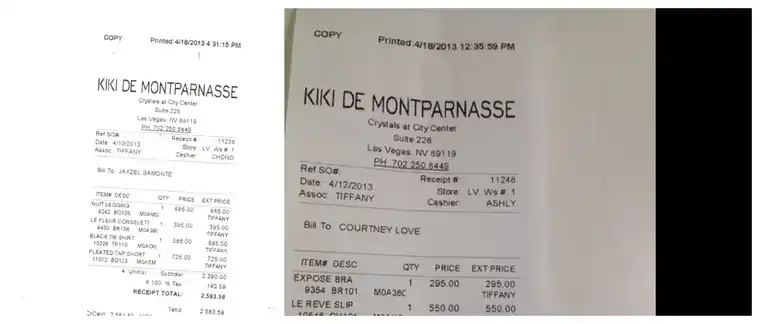
That incident did not stay inside the store because I was the person who ended up dealing with the consequences around Courtney. I was blamed for circumstances I could not control, and I was already so psychologically exhausted that I did not know how to defend myself without making everything worse.
There is a particular kind of panic that comes from knowing the truth about what happened while also knowing that the person with more power can simply tell a different version.
I had already experienced that in Palm Springs when Courtney called me a liar after the assault, and Las Vegas gave me another version of the same lesson.
At the same time, I had something in my own life that I was genuinely excited about. I had been cast in an LGBT reality project called On the Fence, and the project had been moving forward with Logo. I was young enough to still believe that one opportunity could completely change my life, and after years of working around other people’s names, I wanted something that belonged to me. The project began falling apart after the Las Vegas situation as I watched something I had been proud of disappear while I was still trying to understand how I had become the problem in a situation I did not create. Losing it felt like another piece of my life being taken over by whatever was happening around Courtney.
By then, I could barely tell where the job ended and the psychological abuse began. I was sleeping when I was allowed to sleep, working whenever something needed to be done, and constantly trying to predict Courtney's mood because it could change everything around us. I had already been assaulted once, laughed at when I disclosed it, publicly humiliated, kept awake for days, made to change clothes in front of mirrors, and blamed for chaos I had been trying to contain. I was still doing my job because I had become very good at functioning while everything inside me was screaming that I needed to get out. I did not know what getting out was supposed to look like because I had already spent months being conditioned to think that every problem could be fixed if I just tried harder.
While I was still in Las Vegas, I was sexually assaulted a second time. Courtney did not commit that assault either, and I am repeating that here because I will not make her responsible for something another person did to me. I have not given a detailed public account of that second assault and I am not going to force myself to relive every physical detail simply because I am writing this now. I know what happened to me, I know where I was, I know that contracting HIV was from this experience as I had not been with anyone else for well over a year in that way, and I know that I had now been sexually assaulted twice within the same four-month period while living inside an environment that had already taught me to doubt my own memory. By that point, I was done in a way I did not yet know how to say out loud.
Around the same time, the drug use and sleep deprivation became even more extreme. There was a stretch of roughly three days when people around me were using meth and staying awake, and I was still awake with them because that had become normal and nobody seemed to question it. Eventually Courtney and the others crashed and slept for close to an entire day. The silence that followed felt like an opening because for the first time in what felt like forever, nobody was actively pulling me back into whatever they wanted, and I needed to get away before everyone woke up and the entire thing started again.
I met Shawn only a few days after the Las Vegas store incident. He was working twenty-seven floors below where I was staying, and there was no reason either of us could have known when we met how important he was about to become to my life. I was exhausted, ashamed, confused, and carrying things I had not even begun to process. Somehow this person I had barely met could see that I needed help. I had spent months surrounded by famous people, expensive hotels, parties, media companies, and people who acted as though access to Courtney meant access to something important. The person who actually helped me when I needed someone was a man I had known for only days.
About two days after meeting Shawn, he drove me to the airport. The people I had been around were asleep after being awake for days after another stretch of non-stop abuse, and that was the window I used to leave. I remember getting farther away from the hotel and slowly realizing that nobody there could tell me what I was supposed to be doing anymore. I had arrived in Courtney’s world with two suitcases because I thought I had been handed an opportunity, and roughly four months later I was leaving because somebody I had just met understood that I needed to get out.
I did not leave with a clear explanation for what had happened to me. I left with fragments, exhaustion, shame, and the kind of confusion that makes you wonder whether talking about any of it will only create another problem. I knew I had been sexually assaulted twice, and I knew Courtney had not been the person who assaulted me. I also knew what she had done to me psychologically, even though I did not yet have language that felt big enough for the control, humiliation, isolation, sleep deprivation, gaslighting, and constant destabilization that had become my life. For years, it was easier to keep most of it buried. Explaining why I had stayed as long as I did felt like another damn trial where I was expected to prove that I had been hurt correctly.
There were also pieces I remembered so clearly that I never doubted them, and the bra was one of those pieces. Years later, when I started trying to make sense of what had happened, I reached out to Sam Lutfi because I knew about the lawsuit between him and Courtney. I thought that if two people had ended up in that kind of legal fight with each other, maybe he would finally be the person who had no reason to protect her version of anything. I was not contacting him to create a scandal or to get revenge, all I wanted was for someone who had been there to tell me the truth about things I already remembered and help me understand why so much of that period still felt like it had been scrambled inside my head.
Instead, Sam’s emails became another round of baiting and gaslighting. He gave me responses that made me question things I knew I had experienced. Because I had reached out to him specifically believing he was no longer aligned with Courtney, I let those emails get into my head more than I should have. The old feeling came back almost immediately, the same one I had learned around Courtney where I would know what happened and still find myself examining my own memory because somebody else was behaving as though I was the confused one. I had already spent years wondering whether the reason I could not make every piece fit perfectly was because there was something wrong with me. Sam knew enough about that history to make his answers hurt.
About a week later, somebody sent me a photograph of Sam and Courtney together at a theme park, sitting next to each other on a roller coaster. I remember staring at that picture because it answered something his emails had been working very hard to make me question. Whatever story I had been telling myself about him being the person who might finally tell me the truth collapsed immediately. He had been baiting me and gaslighting me while I was coming to him about one of the most traumatic periods of my life. Then there he was beside Courtney as though the distance I thought existed between them had never meant what I believed it meant. The photograph did not change my memory of the bra because I had never needed Sam to tell me what happened with it. After seeing that picture, I understood his emails very differently.
Recovering my old emails later made the entire period come back in a different way. I found production records, videos, expenses, travel details, correspondence, photographs, and messages that placed me back inside days I had spent years trying not to revisit. Some of those records reminded me of things I had forgotten, while others confirmed details I had carried for years without having anything outside my own memory to hold onto. I could see myself coordinating rides, budgets, locations, clothes, videos, and parties while knowing what was happening outside the frame of those emails. It was one of the strangest experiences of my life to find documentary proof that I had been moving through the world normally during a period that had felt completely not normal at all inside my own head.
The records also forced me to stop treating the missing pieces of my memory as actual proof that the whole thing was unreliable. Trauma had not erased everything evenly because I could remember Sam sleeping in his hat and the closet at the Gene Autry House, Courtney laughing when I told her I had been assaulted and trying to cover her body inside Kiki de Montparnasse. I could remember the bra, the exhaustion, and Shawn driving me to the airport with a clarity that made some of the blank spaces even more frustrating. I could also read emails showing that I was working constantly during the same period, which explained how I had managed to keep functioning while my mind was trying to survive something else. I stopped expecting every memory to be complete because I finally had enough pieces to understand what had happened even when some parts were still missing. Before recovering those emails, that is the only way I knew how to deal with things, since books became my very first friends, and not other humans.
Shawn ultimately stayed. We eventually went through the civil union process a few years later, and more than thirteen years after he drove me to that airport, he still knows what those days in Las Vegas meant for me. He met me when I was carrying around two sexual assaults, months of psychological abuse, severe grooming, almost no sleep, and a level of confusion I did not have words for, and he did not require me to explain all of it before deciding I deserved help. I did not understand then how much the months with Courtney would affect the way I reacted to people, power, disbelief, humiliation, and anyone who tried to tell me that something I knew had happened somehow had not.
Part Three
A few years after I left Courtney's world, Shawn and I had managed to build something that finally felt stable. I was still carrying what happened in 2013, but I had gotten very good at putting difficult things into places where they could remain dormant while I kept moving. Then the pain in my left arm became harder to ignore and for years I had been told that the pain and other symptoms were related to fibromyalgia, and after enough appointments where I felt like I was explaining the same thing over and over, I started wondering whether I was the one making too much of it.
Eventually, someone finally looked deeper. A medical student in Las Vegas took what I was describing seriously enough to push for a more extensive workup, and the testing led to bone and nerve biopsies. The cancer was in the mid-humeral shaft of my left arm, and I was diagnosed with stage-one osteosarcoma. By that point my left hand had become seriously compromised, I was losing sensation, and there were times when I could barely control the arm at all. I had spent years being told that my body was doing one thing, only to find out that something much more serious had been growing inside the same place where I had been begging, who were supposed to be the right people, to look.
Cancer changed the way I understood fear because there was no person to argue with and no apartment to leave. I could not talk my way out of it or investigate it until the facts changed. My HIV and the condition of my immune system complicated the normal chemotherapy path, so the treatment plan was not as straightforward as it might have been for someone else. I went through surgery to remove the tumor from the middle of my humerus and then treatment that included an experimental cancer approach because some of the standard options were considered unsafe for me.
The physical effects reached much farther than my arm. Treatment caused me to gain a significant amount of weight, and the weakness and damage in my left arm took away the gym routine that had become one of the ways I kept myself grounded. I had spent much of my childhood being humiliated because of my weight, then worked for years to rebuild my relationship with my body, and suddenly I was watching that progress disappear while trying to stay alive. Eating was already complicated for me because texture problems have always made food difficult, so the usual advice people give about diet and exercise did not fit what my body or brain could actually do at the time.
The pain was bad enough that there were periods when I was taking Percocet and OxyContin, and eventually I became frightened of what long-term use could do to me. I stopped the opiates abruptly because I did not want another problem attached to everything I was already fighting. A pain doctor later helped me find other ways to manage the pain, appetite problems, and insomnia, but none of that gave me back the arm I had before the cancer. Even after I began improving, I was learning that surviving something and returning to the person you were before it are completely different experiences.
For a short period after the first surgery and treatment, I believed I had beaten it. I remember telling people that I had been given a second chance at life because that was genuinely how it felt. I had already survived enough things that should have broken me, and now I had survived cancer too. I wanted to believe that maybe my body had finally finished trying to scare the hell out of me.
Not long after that first surgery, I received a phone call from someone on my biological father’s side of the family whom I had not spoken to since we were young, which came completely out of nowhere. He told me that someone had contacted him saying my biological father had been murdered, that his body had been found in multiple garbage bags inside an abandoned warehouse, and that somebody needed to identify him. I had not seen my biological father since I was six years old, when the last image I had of him was through the slits in a closet door, and now I was apparently supposed to go identify what was left of his body.
I had no idea what I was supposed to feel, who would? This was a man who had caused damage that followed me long after he disappeared, and I honestly did not know whether hearing that he was dead made me sad, angry, relieved, numb, or something I did not have a word for. I did not even know if I would recognize him because I could barely remember what he looked like. The harder question was whether some part of me still cared, because I had spent most of my life telling myself I did not.
I refused to identify the body but, by then, I knew enough about my biological father’s history to know that a story involving death and disappearing could just as easily be another attempt to get out of trouble, because he had already made newspapers more than once for schemes that involved running, hiding, or reinventing himself. Instead of going to a morgue, I started looking. That decision was one of the first times I realized how much I loved investigating something until I could understand what had actually happened.
I found him on Facebook using a different name. I stared at the profile for a while because I was looking at a man I had spent decades trying not to think about, and the person on the screen did not feel like a father to me and sent him a message mostly because I wanted to see whether he would answer. He did, which meant the murdered man whose body supposedly needed to be identified was sitting somewhere with access to Facebook and enough life left in him to respond to the son he had abandoned.
The mindfuck came back almost immediately as I learned that he was on the run because of things he had done, and some of those things had once again reached into my life because we share the same name. He had used my identity in connection with crimes after I had already spent years repairing damage he caused by opening lines of credit in my name when I was a child. Identity theft was not some strange thing that happened to me once as an adult. It had been sitting in the background of my life since well before I even knew what a credit report was.
That history is also why it makes me so angry when someone finds one of his records and tries to attach it to me. We have the same name, and he spent years making that dangerous for me. I have had to prove more than once that something carrying my name belonged to him, or that something done with my information was done by someone else. I had already repaired my credit after what he did when I was young, and now I was finding out that he had carried the same behavior into adulthood while I was recovering from cancer.
When I confronted him about his lies and what he had done, he decided to go after Shawn. My husband had nothing to do with the history between my biological father and me, and that did not stop him from reaching out to Shawn and unloading homophobic slurs at him. I had spent my childhood being bullied because I was gay, survived a relationship where someone tried to make me feel small, and escaped the psychological chaos around Courtney only to have the man who helped create so much of the original damage come back through a screen and attack my husband for being gay too. Then I learned something that still makes my skin crawl. Immediately after the Courtney period in New York, my biological father had apparently lived about three blocks away from me for roughly a year and a half. I had gone years without seeing him and did not know what he looked like well enough to recognize him on the street, so there is every possibility that we passed each other without either of us knowing. After everything that happened in 2013, I had been trying to rebuild my life while the man I had not seen since childhood was living only blocks away.
COVID arrived before I had really figured out what to do with any of that. Medical care became harder to access at the exact time I needed consistent follow-up, work and ordinary routines disappeared, and being medically vulnerable meant the outside world suddenly felt dangerous in a completely different way. I started writing a novel called The Elementlings because I needed something I could control when almost nothing around me felt controllable. I could decide what happened to those characters even when I had no idea what was going to happen to me.
Around the same period, my great-aunt Dolores became very sick very quickly. She has always been more like a second mother to me than an aunt, and when her health began falling apart I went to Florida for about three months to help my family navigate the medical system and advocate for her. COVID made every part of that harder because the rules surrounding hospitals and access changed how families could be present for the people they loved. I had spent years learning how to push when something did not feel right medically, and suddenly I was trying to use everything I had learned for one of the people who had helped raise me.
She ended up passing away anyway. Her death completely destroyed me, and there are parts of what happened around her care during COVID that still piss me off because I cannot separate the loss from how powerless the protocols made us feel. Dolores had been there at the beginning of my life, including the day before I was born when she realized my mother could not be awakened and helped get her to the hospital. Losing her while the world was already shut down felt like losing one of the people who had been holding the beginning of my story together.
At almost the same time, I learned that the cancer treatment and surgery had not finished the job. The osteosarcoma was back in my left humerus. I had already gone through the fear of diagnosis, the surgery, the treatment, the damage to my arm, and the brief relief of believing I had made it into remission. Now I was grieving Dolores while learning that the thing I thought I had survived had been waiting for me again.
I was terrified because I knew exactly what cancer could take from me by then and also what treatment had already taken from my body, and I was living through a pandemic that made getting ordinary medical care harder than it should have been. The cancer limited how much I could use my left arm and changed the way I moved through daily life, while the treatment side effects stayed with me even after the immediate danger began to pass. There were days when I was dealing with grief, fear about whether I would live, and the practical problem of getting through ordinary tasks with a body that no longer worked the way it had before.
I kept writing The Elementlings through all of it because I needed to finish something that illness had not chosen for me. Finishing the novel became one of the few decisions that still felt completely mine. I had started it while the world was closing down, carried it through Dolores getting sick and dying, and kept working after finding out the cancer had returned. I was not going to let another disaster become the reason I abandoned something I loved. I did this for her, and for me.
After Florida, I returned to Northern California and discovered that being back home did not mean anything was going to become easier. While Shawn and I had been away, the maintenance woman at our apartment complex had entered our home. At some point someone had dumped cat litter beside a dumpster, and because she knew we had cats, she decided it had to be ours. That ridiculous assumption turned into one of the most frightening episodes Shawn and I had experienced together.
The woman, Debbie, went ballistic. She smashed our windshield, threw a rock at my head, and repeatedly called us faggots while she was drunk and appeared to be on something else. At one point she fired a gun into the air to scare us as the situation then expanded beyond her when biker friends we later learned were connected to the Proud Boys began coming around our home and threatening us.
We called the police because by then there was a gun involved and people were coming to where we lived. The officers told us we needed to get a restraining order, so that is what we did, and the order was granted. What did not happen was anything that made us feel safe enough to stay. A piece of paper was supposed to create distance from someone who had already shown that she was willing to smash property, throw something at my head, scream homophobic slurs, and fire a weapon in the air.
I was in another state when the men came back again while Shawn was home with my niece, my nephew, and my goddaughter, which meant the people I cared about were sitting inside the house while the threat I thought we had legally addressed returned to the door. My nephew is a large man and had his legally registered weapon with him. Once those men understood that he was not going to let them intimidate everyone inside that house, they left.
That was enough for us, there wasn’t any way to remain safe where we were. We packed only some of our belongings and left the rest behind because staying had stopped feeling worth whatever we owned. I had already learned in other parts of my life that there is a point when you stop calculating the cost of leaving and just get away. It was another home we left because somebody else had decided we were acceptable targets.
People hear California and imagine one version of the state, but Northern California can feel like a completely different country from the coast or the southern part of the state. The Sacramento Valley is the place I started calling Calabama because Trump flags could be everywhere while being openly gay still carried a level of hostility that people who only know Los Angeles or San Francisco would not expect. Shawn and I had lived in plenty of places where people knew we were gay without turning it into a threat. What happened there showed me how quickly an ordinary housing dispute could become something much uglier the moment that someone decided our sexuality made us fair game.
We moved back to Las Vegas and eventually discovered that the identity problems connected to my name had become even worse than I knew. At least eight driver's licenses carrying my information had been confiscated from other people, except the photographs on those licenses were theirs. People had been able to walk around with my name and identifying information attached to their faces while doing things that later had to be separated from me. I went through another long process of proving that I was who I said I was and that those acts belonged to other people.
I was ultimately able to establish that I had not done what had been attached to my identity despite that proving innocence did not erase the damage that came before it. Every time someone searches my name and finds something connected to my biological father, or something done by a person carrying false identification with my information on it, I am back in the same position of explaining why somebody else’s actions should not belong to me. The fact that this began with my own father makes it worse because the theft of my identity started before I had enough of an identity of my own to protect.
For a little while, life became quieter. Shawn and I were helping take care of our godchildren, nieces, and nephews, and I kept working on the novel until I finally finished it. I had also discovered during the fake story about my father’s murder that I genuinely loved investigating, especially the moment when scattered information finally began making sense. Writing gave me somewhere to put what I found, so reporting slowly became the next thing I threw myself into.
I eventually began reporting on the Epstein and Ghislaine Maxwell world, including the way survivors and witnesses were being talked about, challenged, and discredited. I followed documents because documents were something I understood. After a lifetime of having people tell me things that did not match what I had seen, I wanted the record in front of me before I accepted anyone's version of events. I preserved audio, screenshots, messages, court documents, and timelines because I had already learned personally what happens when someone with more power gets to tell the story first. I learned that lesson well.
That work became personal much faster than I expected. I reported on Maxwell-related material and on the treatment of people connected to the Epstein story, including Anouska De Georgiou, and then the language people were using about me began changing. Criticism of my reporting turned into claims that I was stalking people or threatening them. People who did not know me began describing me as unstable or dangerous while other people repeated those descriptions like repeating them would make them true.
By the end of May 2026, those accusations had moved far beyond social media with Federal agents arriving at my Las Vegas home and spoke with my mother. The next day I sat through an in-person meeting that lasted long enough for me to answer what felt like hundreds of questions, and I signed paperwork allowing access to private medical and mental-health information because I wanted there to be no question that I was cooperating. I was being asked about allegations involving threats toward the President and other protected or high-ranking people, including stories about a list, or manifesto, and claims that my reporting somehow made me a danger.
I had never made those threats. I had not created some assassination list, and I was not planning violence against anyone. The allegations were ultimately treated as not credible, and I was told there was no reason for me to stop writing. That should have ended it, but the damage had already entered my home because my mother had been questioned and my husband had watched another situation built out of somebody else’s claims become something we had to survive.
The fear from that period was different from your average online harassment because a false accusation involving federal law enforcement can get someone killed before the truth has any real time to catch up. I had already lived through a father using my identity and other people carrying licenses with my information on them and now I was watching strangers build another version of Troy and send that version into places where the consequences were much more serious than a nasty post. I cooperated because I knew I had done nothing wrong, but knowing that does not stop your body from reacting when federal agents are suddenly standing at your home with large firearms ready if anything were to happen.
The attacks continued after the federal contact as people circulated claims that I was stalking or harassing them, and parts of my private medical history were dragged into public arguments where they had no legitimate reason to be. My HIV status was weaponized, and people used mental-health language as another way to tell an audience that I should not be believed. I had spent my life learning that disclosure was supposed to help people understand you, and I was watching personal information become ammunition instead. My mother found out about my HIV status through this bullshit, and that was what hurt me the most because it was my story to tell, when I was ready.
Soon after that, my main Substack publication was suspended. That was where much of my reporting lived, along with the audience and income I had been trying to build. I appealed, preserved the messages, and kept trying to understand what had happened while the same people attacking my credibility celebrated the practical damage. Losing access to a platform is easy to describe as an account problem until the account contains your work, your readers, and one of the few ways you have to earn money while living with chronic illness.
The current attacks have kept dragging old parts of my life back into the present. Anonymous and named accounts have used Courtney Love and Hole material knowing exactly what that period means to me, including the grooming and sexual assaults I survived around that time. Other people have repeated claims that I am dangerous or a stalker even after the federal allegations were found not credible. Someone even invented a marriage to a woman while Shawn, the man who drove me to the airport when I was trying to escape Courtney’s world, has been my husband and has been standing beside me through all of this.
Homophobia has never completely left the story either. I have been called slurs since I was a child, watched my biological father aim them at Shawn, had a woman in Northern California scream them while attacking us, and now I still watch strangers use my marriage or sexuality as something they can twist when they want to humiliate me. I have also watched people who claim to care about survivors use the most traumatic parts of my own survivor history as material for public ridicule.
The people doing it now were not in the closet when I was six, they were not in the Gene Autry House in 2013, and they were not sitting beside me when I learned the cancer had returned.
My health did not pause while any of this was happening and I still live every day with chronic illness and the damage left by conditions and treatments that have accumulated over years. There are days when my body is already demanding more than I want to give it before I open a laptop and see another person assigning me a crime, a motive, or a version of my life that belongs to somebody else. I have spent an exhausting amount of time proving that I am not my biological father, that I am not the person on somebody else’s driver's license, and that I am not the dangerous character people online decided would be more useful than the person I actually am because it fits the narrative that makes them look better.
What wears me down most is how familiar the feeling has become. As a child, I knew what I saw through the closet door and still had to live with the damage somebody else created. With Courtney, I knew what happened in Palm Springs and Las Vegas while people around me laughed, denied, or complicated things I remembered clearly. During cancer I knew something was wrong with my arm long before the right testing finally explained why, and now I am again living inside a period where other people keep trying to tell me what my own life means while I am the person who has had to survive it.
I have not done anything to deserve what is happening now, and I am tired of having to make that sentence part of my life. I am tired of losing time to proving negatives while trying to protect my work, my family, my health, and whatever stability Shawn and I manage to rebuild after the last disruption. Shawn has had to live inside many of those consequences with me, just as he has since the days when he drove me to that airport in Las Vegas. There are mornings when I genuinely wonder when I am ever going to get a break, because chronic illness would already be enough to carry without strangers deciding that my name, my history, or the worst things that have happened to me are available for them to use.
Now you know every detail of my life, my struggles, my pain, and the truth. Not my truth, but THE TRUTH. This was the most difficult thing I have ever written in my life and I feel like a part of me now lives on this page. I didn't feel ready to tell this story, not yet, because I am sure people will continue to use these things against me to make things even worse than they are already. But, everything has an expiration date and this one has to be coming soon because how much more can I be expected to endure? One thing I do promise, and this is one I made to myself as well, is to not give up this time and to not allow any of these people to get away with what they have done and continue to do.
Ellie Leonard, especially, who I hope reads this and understand that I am not who she thinks I am nor who she is making me out to be to her millions of followers throughout her Substack and social media. Waking up to someone saying that they want to burn my house down a few weeks ago was terrifying and yet she continues to promote this false narrative about me, and why? Provide the evidence of what you claim I have done, because so many have asked to see it and you have only made excuses. I am not asking because I want a gotcha moment, I am asking because too many people have impersonated me or used my identity to do very bad things, and I would like to set the record straight if that is the case here too. It is only fair.
← Back to What About the Boys?